Cautious open as Iran
clashes rattle oil
Futures are modestly higher despite an overnight Strait of Hormuz firefight. All eyes shift to the 8:30 AM jobs report.
Hormuz firefight spooks traders overnight
A fresh exchange of fire broke out Thursday night as three U.S. Navy destroyers transited the Strait of Hormuz. US Central Command says forces intercepted unprovoked Iranian attacks and responded in self-defense — Iran's government countered that the U.S. struck first. Oil surged roughly 2% on the news. A peace deal remains on the table: Iran is reviewing a U.S. one-page proposal that includes a nuclear enrichment moratorium and sanctions relief. But Iran's hardliners are demanding war reparations, and prediction markets put the odds of a deal before Trump's May 14–15 Beijing summit at just 16%. Talks are alive, not advancing.
April jobs report drops at 8:30 AM — the week's biggest wild card
Wall Street consensus expects just 55,000 new nonfarm payrolls, down sharply from the surprisingly strong 178,000 in March. The unemployment rate is expected to hold at 4.3%. Wednesday's ADP private payrolls beat — 109,000 versus an 84,000 estimate — gives some reason for optimism, but analysts warn the two measures have diverged frequently of late. A strong beat could reignite bets on a Fed rate hike; traders currently price a 25% chance of a hike sometime in 2026. The Fed held rates at 3.50–3.75% last week, citing persistent inflation concerns tied to the Hormuz blockade.
Tech earnings drove this week's record highs
Wednesday was the week's standout session. AMD surged roughly 19% on strong guidance, Super Micro Computer jumped 18%, and Nvidia added nearly 6% after announcing a new Corning partnership for AI data center optical gear. The Nasdaq touched a fresh all-time high Thursday before giving ground. The S&P 500 closed Thursday at 7,337, just below Wednesday's record of 7,365. The Dow remains just shy of the 50,000 milestone at 49,597. On the downside: Snap flagged weak ad revenue tied to Middle East conflict fallout, and Whirlpool suspended its dividend citing tariffs and weak demand.
Oil volatile around $94–$100, still the dominant macro lever
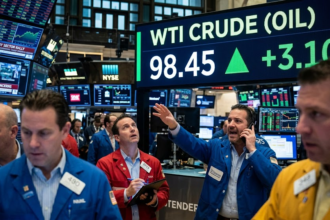
WTI settled Thursday at $94.81, briefly dipping below $90 on deal hopes before clawing back. Brent closed just over $100. Oil has been the single biggest macro lever this week — every Hormuz headline moves it several percent in minutes. Energy stocks remain the defensive trade, and the longer the strait stays closed, the more upward pressure on inflation and the more complicated the Fed's calculus becomes. Citi's U.S. equity strategist noted that the duration of the conflict will materially affect growth expectations across broad swaths of the market.
Bottom line: Markets are in a holding pattern, not a panic. The AI earnings story is intact and Wall Street is still close to record highs. The US–Iran situation remains the dominant macro risk — any escalation in the Strait sends oil spiking and stocks lower, while credible deal progress does the opposite. The jobs number at 8:30 AM will set the early tone for trading today.