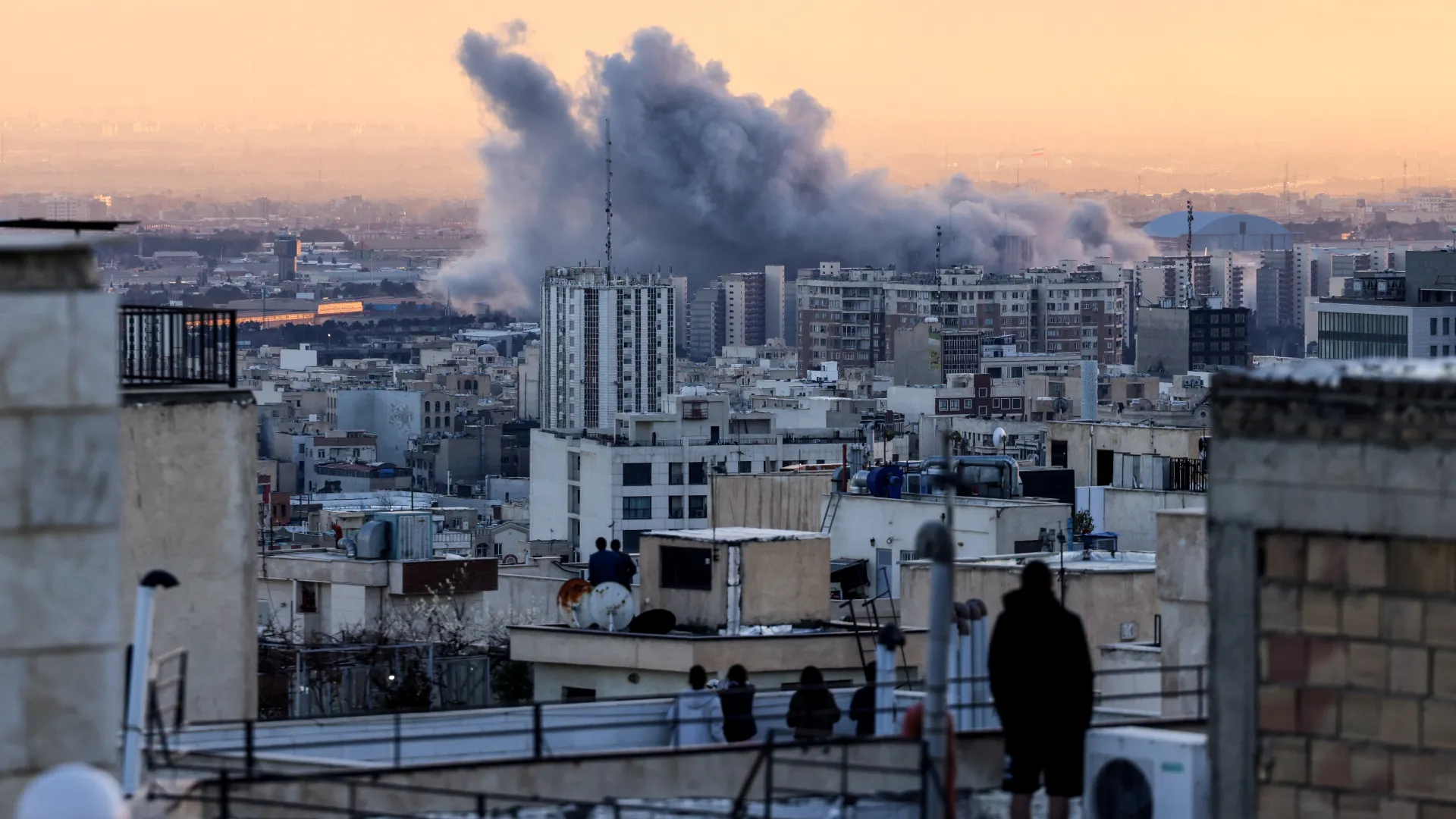
When the United States and Israel launched joint airstrikes on Iran on February 28, 2026, the immediate human costs were staggering. But within hours, the economic shockwaves were already spreading far beyond the Middle East. What followed has been described by the International Energy Agency as the “largest supply disruption in the history of the global oil market.” And alongside the market chaos, a troubling pattern of suspiciously well-timed trades has emerged — raising serious questions about whether those with access to classified government decisions have been quietly profiting from the war. Wikipedia
The Energy Shock
The most immediate and visible consequence of the conflict has been the price of oil. Since the U.S.-Israeli strikes on Iran began, Tehran has launched waves of ballistic missiles targeting Israel, U.S. military bases, oil depots, and other infrastructure across the Gulf region. Iranian attacks on vessels passing through the Strait of Hormuz have dramatically reduced traffic through the narrow channel, which carries about 20 percent of global oil and gas supplies. Al Jazeera
The result has been a historic price spike. Oil prices have soared more than 50 percent since the conflict began on February 28. Brent crude, the international benchmark, has crossed $111 per barrel. Gas prices in the United States hit $4 per gallon by March 31, representing a surge of roughly 30 percent. CNBCWikipedia
The damage extends beyond crude oil. On March 2, QatarEnergy suspended its LNG production after an Iranian drone attack, straining the global liquefied natural gas market. Qatar supplies roughly 20 percent of the world’s LNG. A subsequent Iranian strike on Qatar’s Ras Laffan industrial complex caused a 17 percent reduction in Qatar’s LNG production capacity — damage estimated to require three to five years to fully repair. Consequently, LNG spot prices in Asia increased by over 140 percent. Al JazeeraWikipedia
Stock Markets and the Global Economy
Global stocks have fallen 5.5 percent since the war began, with Asian stock markets being the worst hit. The New York Stock Exchange Composite Index fell 6 percent in the initial weeks, while the Nasdaq fell 2.4 percent. Al Jazeera
Yet paradoxically, markets have shown a strange resilience that has alarmed many economists. The S&P 500 hit a new all-time intraday high on May 1, touching 7,230.12 — despite the surge in energy costs caused by the war. Amrita Sen, director of market intelligence at Energy Aspects, warned that global economies could be “sleepwalking” into a serious recession, telling CNBC that “if anything, we think oil should be higher and the equity market should be a lot, lot weaker.” CNBCCNBC
The concern is that the full damage from elevated energy costs hasn’t fully filtered through to consumers and businesses yet. Higher-for-longer oil prices will reverberate across commodity markets, affecting LNG, chemicals, and fertilizers. Food prices are expected to rise as well, driven by disruptions to urea transport and natural gas used in the fertilizer sector. CNBC
For Europe and Asia, the picture is more immediately dire. A severe scenario in which the conflict persists for several months could see oil prices rise to around $130 per barrel. The eurozone economy would likely contract in the second quarter and flatline over the second half of the year. If the war continues for several months, GDP growth in the eurozone is likely to slow to just 0.5 percent year-on-year, while economic growth in China could fall below 3 percent. The United States, cushioned by domestic energy production, is expected to weather the storm better than most — but is not immune. Chatham HouseAl Jazeera
A Ceasefire, but No Resolution
A U.S.-Iran ceasefire was announced in early April, and markets initially rallied. However, analysts at Charles Schwab noted the moves appeared driven more by rapid unwinding of hedges and speculative positions than by any fundamental resolution. Market volatility remains high, with headline risk continuing to drive sharp short-term swings. Charles Schwab
Key questions remain unanswered: whether the truce will hold, and how quickly traffic through the Strait of Hormuz and damaged energy infrastructure can normalize. Both factors could keep energy prices elevated even if the war formally ends. The war began with the killing of Iran’s Supreme Leader Ali Khamenei, leaving Iran’s political future deeply uncertain — a fact that continues to unsettle global markets. Charles Schwab
The Insider Trading Question
Perhaps the most alarming dimension of this story is not what the war has done to markets, but what it may have done for a select few who apparently knew what was coming before the public did.
On the morning of March 22, just before 7 a.m. Eastern time, oil futures markets lit up. In a single 60-second window, nearly 6,200 oil contracts were traded with a total value of around $580 million. The average volume for that same time period over the preceding five days had been barely more than 700 contracts. There was no public news at that moment — but fifteen minutes later, President Trump posted on Truth Social that the U.S. was holding “productive conversations” with Iran. People’s World
This was not an isolated event. On the Friday before the war began, an unusual surge of more than 150 Polymarket accounts placed hundreds of bets predicting a U.S. strike on Iran by the next day, according to a New York Times analysis. One consistent theme throughout the war’s market gyrations has been well-timed transactions that have minted money for traders — some impeccably timed just before Trump’s proclamations or social media posts. AxiosBloomberg
The ceasefire announcement produced particularly striking trading activity. A claim circulated widely that an investor with connections to the Trump administration staked $51 million on the prediction that the price of oil would drop before the White House announced the ceasefire on April 7 — allegedly resulting in $170 million in profit. While that specific claim could not be independently verified, a Snopes analysis of minute-by-minute oil trading data confirmed that large numbers of short positions were placed hours before Trump announced the ceasefire details. SnopesSnopes
On the prediction market platform Polymarket, the patterns have been even more striking. In one case reported by CNN, a trader won 93 percent of their bets — an extremely unlikely success rate — netting nearly $1 million. Nick Vaiman, CEO of analytics company Bubblemaps, which discovered the trades, called it “strong signaling of insider activity.” CNN
Conflicts of Interest in Plain Sight
Beyond anonymous trading accounts, critics have pointed to obvious conflicts of interest involving people close to the president. Trump’s sons, Eric and Donald Jr., have invested in drone companies competing for Pentagon contracts. Jared Kushner — Trump’s son-in-law and one of his Iran envoys — is seeking to raise billions for his private equity fund from Persian Gulf governments entangled in the war. Axios
Donald Trump Jr. has also invested in Polymarket through his venture capital firm and serves as a strategic adviser for Kalshi, a rival prediction market. Both platforms have found backing from the Trump-controlled Commodity Futures Trading Commission — the federal regulator of prediction markets — meaning any favorable regulatory decisions could financially benefit the president’s family. The Times of Israel
The Justice Department has taken at least one concrete step. A U.S. special forces soldier was indicted for allegedly using classified information to make $400,000 on Polymarket off the January U.S. raid to capture Venezuelan President Nicolás Maduro — an operation whose details were highly classified at the time. When Trump was asked about the suspiciously timed winning bets on the Iran war more broadly, he said only that he was “not happy with any of that stuff” — a notably muted response. CNN
Democratic lawmakers, including Senator Chris Murphy of Connecticut, have raised the prospect of administration officials enriching themselves using inside information. The White House warned staff not to engage in insider trading on prediction markets, and spokesperson Kush Desai stated that “any implication that Administration officials are engaged in such activity without evidence is baseless and irresponsible reporting.” CNN
What Comes Next
The pattern of suspicious trades ahead of major Trump announcements is not new to this war. Last April, a surge of bullish stock trades appeared minutes before Trump announced a dramatic 90-day pause on his “Liberation Day” tariffs. On January 2, a trader turned roughly $32,000 into more than $400,000 by betting on the capture of Venezuela’s Nicolás Maduro before it was announced the next morning. Axios
To be clear: there is no evidence that Trump himself knew about the suspicious trades or that any named officials were directly involved. The anonymous nature of many trading platforms makes it extraordinarily difficult to trace who is behind the transactions. But the pattern — recurring, mathematically improbable, and consistently timed to non-public government decisions — has become too consistent to dismiss. Axios
Democrats, favored to gain ground in the November elections, are already laying the groundwork for investigations into whether insiders are trading on Trump’s market-moving decisions. Whether those investigations produce accountability remains to be seen. Axios
What is certain is this: while millions of Americans pay more at the gas pump and face rising food prices as a direct consequence of a war their government started, someone — somewhere — has been making extraordinary profits. The question of who, and how they knew, is one that demands a serious answer.
This article is based on reporting from Axios, Bloomberg, CNN, Al Jazeera, Charles Schwab Research, Chatham House, Snopes, and The Times of Israel.


