Pre-Market Briefing — Friday, May 29, 2026
Futures, equities, crypto, metals and the geopolitics that won't stop moving the tape. Levels noted as of roughly 7:10 a.m. ET.
The 30-second version
- Index futures are barely green — the S&P and Nasdaq are clinging to record highs after three straight record closes.
- Dell ripped ~40% after hours on an AI-server blowout, keeping the AI trade firmly in charge.
- A US–Iran ceasefire extension is reportedly sitting on the President's desk — unsigned. Again.
- Oil is collapsing (Brent's worst month since 2020), crypto is sulking, and gold is parked near records.
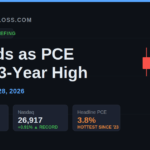
- The data that actually matters this week — April PCE — already came in hot. The Fed's hike debate is back.
Overnight snapshot
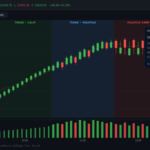
Stock futures opened the last session of the week with all the conviction of someone deciding whether to get out of bed: Dow, S&P 500 and Nasdaq 100 contracts each nudged about 0.1% higher while Wall Street waited on an official word from Washington about Iran that, as of this writing, still hasn't come. The S&P and Nasdaq are sitting on record highs after notching new closing records three days in a row, so "barely green" is a perfectly fine place to be. Yahoo Finance market coverage
Futures: records, but on tiptoes
The defining feature of this tape is how calm it looks given the headlines. The VIX is loitering around 15.8, which is the volatility market's way of shrugging at a live Middle East conflict, a Fed leadership change and an inflation print that just ran near 4%. The Russell 2000 is the lone laggard in the pre-market, down a fraction — small caps remain the asset class least invited to the AI party. Yahoo Finance futures data
For active traders, this is a tape that rewards patience over heroics: tight ranges, low implied vol and a market that gaps on headlines it can't control. If you're funded and trading index products into this, it's worth understanding exactly how your fees, drawdown rules and payout splits behave on quiet days like these — we broke that down in our guide to the true cost of trading futures with a prop firm.
Equities: Dell makes the AI trade look easy again
The single biggest mover heading into the open is Dell, which surged close to 40% after the bell. The hardware maker guided fiscal-2027 revenue to roughly $167 billion — about $60 billion of that from AI servers alone — and disclosed $24.4 billion in AI orders with $16.1 billion of AI server sales in the quarter ended May 1. The stock was already up more than 150% on the year before this print, so the AI capex story is, if anything, accelerating rather than cooling. Bloomberg, via Yahoo Finance
It wasn't just Dell. Snowflake jumped roughly 36% on its own earnings beat and raised outlook, reinforcing that enterprise AI spending is still very real money. The space sector, meanwhile, is the day's drama: AST SpaceMobile slid about 11% pre-market and peers like Rocket Lab, Intuitive Machines and Redwire fell low-to-mid single digits after a Bloomberg report pegged SpaceX's upcoming June IPO at a lower-than-hoped $1.8 trillion valuation — and after Blue Origin's New Glenn reportedly blew up during a static-fire test. GameStop also resurfaced, lifting its economic exposure to eBay to 7.78% from 6.55%, because of course it did. Stocktwits reporting
The war: a peace deal that's perpetually five minutes away
Here's the story that's been jerking this market around for weeks. The US and Iran have reportedly agreed in principle to a 60-day extension of their ceasefire that would reopen the Strait of Hormuz to "unrestricted" shipping and require Iran to clear mines from the waterway within 30 days, while talks on Tehran's nuclear program continue. The catch: President Trump hasn't signed it. He reportedly wanted "a couple of days to think about it," Vice President JD Vance said it's "too early" to know "when or if" a deal happens, and Treasury Secretary Scott Bessent would only offer that "the teams have been going back and forth." Markets have rallied on near-identical headlines before, only to watch them evaporate — so treat any "deal is done" tape with a healthy dose of suspicion. Yahoo Finance / Axios reporting
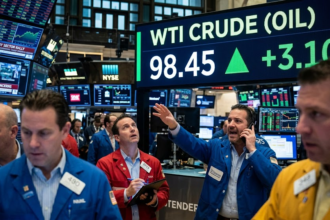
The good news for consumers (and the Fed) is that the energy market is acting like the deal is real. Oil is falling hard: Brent dropped below $93 a barrel and is down about 18% on the month — its worst month since 2020 — while WTI hovers near $88. After weeks of the effective closure of Hormuz choking off millions of barrels of daily supply and shoving Brent above $100, that's a meaningful relief valve. Whether it holds depends entirely on a signature that keeps not happening. Bloomberg, via Yahoo Finance
Crypto: sitting out the party
While stocks set records, crypto spent the week doing the opposite. Bitcoin slid from around $77,000 on Monday to roughly $73,000–$74,000 by Thursday, and it's been pinned in oversold "bear flag" territory heading into Friday. For context, that's still a long way below October 2025's all-time high near $126,200 — this is not the fearless, headline-chasing bid of last cycle. Ethereum has been just as listless, drifting around the $2,000–$2,070 zone. Fortune crypto pricing
The interesting tell is the decoupling: crypto has been reacting less and less to Middle East headlines and more like a tired risk asset that wants a catalyst it isn't getting. Equities are pricing in peace and an AI boom; Bitcoin is pricing in a hangover. If you're trading the funded-account route in digital assets, the rule set matters even more when the tape is this choppy — here's our breakdown of what crypto prop firms really cost.
Metals: gold stays bid, silver holds
Gold is the asset quietly making the most sense. It's up about 0.7% near $4,562 an ounce and parked close to record territory, doing its dual job as a hedge against both the geopolitical tail risk and an inflation backdrop that refuses to cool. Silver has been more volatile but is holding in the low-$70s after a sharp Thursday pullback. As long as the Fed's hike-versus-cut argument stays unresolved and real yields stay contested, the safe-haven bid under gold has a reason to exist. TheStreet market data
The Fed: the chair hired to cut rates, staring at hikes
This is the macro plot twist underneath everything. Kevin Warsh was confirmed as Fed Chair on May 13 in a razor-thin 54–45 Senate vote and took the helm after Jerome Powell's term expired mid-month. Warsh was widely expected to lean toward rate cuts — that's largely why he got the job. Then the Iran war happened, oil spiked, and inflation came roaring back. Yahoo Finance policy desk
The result is genuinely awkward: markets now think a rate hike is more likely than a cut this year. Per CME's FedWatch tool, investors see an 80%-plus chance of no move in June and July, but the odds of a hike by December have climbed toward 70%. A chair brought in to ease may end up tightening instead — and the April PCE report released Thursday, the hottest reading in nearly three years, did nothing to make that conversation go away. CBS News
High-impact data: this week & into next
It was a holiday-shortened week (Memorial Day shut the market Monday), and the marquee release already landed: April's PCE inflation print on Thursday, which came in hot and reignited the hike debate. Friday's docket is lighter — a regional manufacturing read and a parade of Fed speakers whose every word will be parsed for hints on the rate path. The real fireworks are next week, when the May jobs report arrives. Kiplinger economic calendar
| Date | Release | Why it matters | Impact |
|---|---|---|---|
| Thu, May 28 | April PCE (core & headline) | Fed's preferred inflation gauge — ran near 4%, hottest in ~3 years | High |
| Thu, May 28 | Q1 GDP (2nd estimate) | Growth check against sticky inflation | Medium |
| Fri, May 29 | Regional manufacturing PMI | Read on factory activity ahead of national ISM | Medium |
| Fri, May 29 | Multiple Fed speakers | First signals under the new Warsh-led Fed | High |
| Mon, Jun 1 | ISM Manufacturing | Kicks off a data-heavy new week | Medium |
| Fri, Jun 5 | May Jobs Report (NFP) | The hike-vs-cut tiebreaker — strong jobs = no cuts | High |
Scalper's lens. With the VIX near 15.8 and ranges compressed, this is a "fade the extremes, don't chase the middle" environment — until a Hormuz headline hits and turns it into a momentum tape in one tick. Keep your stops mechanical and your size honest; gap risk over the weekend is real with an unsigned ceasefire in play.
Going into the weekend
The whole market is hostage to one signature. If Trump signs the Iran framework, expect oil to extend its slide and risk assets to cheer; if the deal collapses — as similar deals have before — crude snaps back and the inflation/hike narrative gets louder fast. Layer in next Friday's jobs report and you've got a setup where positioning into the close matters as much as the news itself. If you're trading a funded account through any of this, knowing precisely how your firm handles overnight and weekend risk is non-negotiable — we walk through the mechanics in our deep dive on how prop firm payout structures really work.
FAQ
Why are stocks at record highs during a war?
Two reasons: markets are pricing in a US–Iran ceasefire that would reopen the Strait of Hormuz and pull oil prices down, and the AI capex boom (Dell, Snowflake, Nvidia demand) is driving an earnings story strong enough to override geopolitical fear. The rally is narrow and concentrated, though — small caps and crypto aren't joining in.
What is the Strait of Hormuz and why does it move markets?
It's a narrow waterway between Iran and Oman/UAE through which roughly 20% of the world's oil supply passes. When it's threatened or blockaded, crude spikes and inflation fears rise; when a reopening looks likely, oil falls and risk assets rally. That's why ceasefire headlines whipsaw the entire tape.
Why is Bitcoin falling while stocks rise?
Crypto has decoupled from the equity rally and is trading like a tired risk asset. Bitcoin slid from about $77,000 to the $73,000–$74,000 area through the week and sits in oversold territory, well below its October 2025 record near $126,200. It's reacting less to Middle East news and waiting on a fresh catalyst.
Could the Fed actually raise rates in 2026?
Markets increasingly think so. With inflation reignited by the oil shock, CME FedWatch odds of a rate hike by December have climbed toward 70%, even though new Chair Kevin Warsh was expected to favor cuts. June and July are seen as likely holds, with the May jobs report (due June 5) a key tiebreaker.
What's the single biggest risk into the weekend?
An unsigned US–Iran ceasefire. The framework is reportedly on the President's desk but not approved. A signature likely pushes oil lower and risk higher; a collapse sends crude back up and amplifies the inflation and rate-hike narrative. That gap risk is why position sizing into Friday's close matters.
This briefing is for informational and educational purposes only and is not financial advice. Markets move fast; verify live prices before acting. Levels referenced are approximate pre-market readings as of roughly 7:10 a.m. ET on May 29, 2026.