Markets Desk
End of Session
Markets Close at Records — But Iran Steals the Weekend Headline
Equities extend their win streak to six weeks as a blowout jobs report overshadows historic consumer pessimism. Tehran's response to a U.S. peace proposal arrives — or doesn't — after the close.
The Session
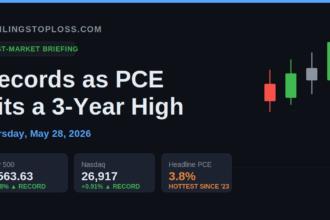
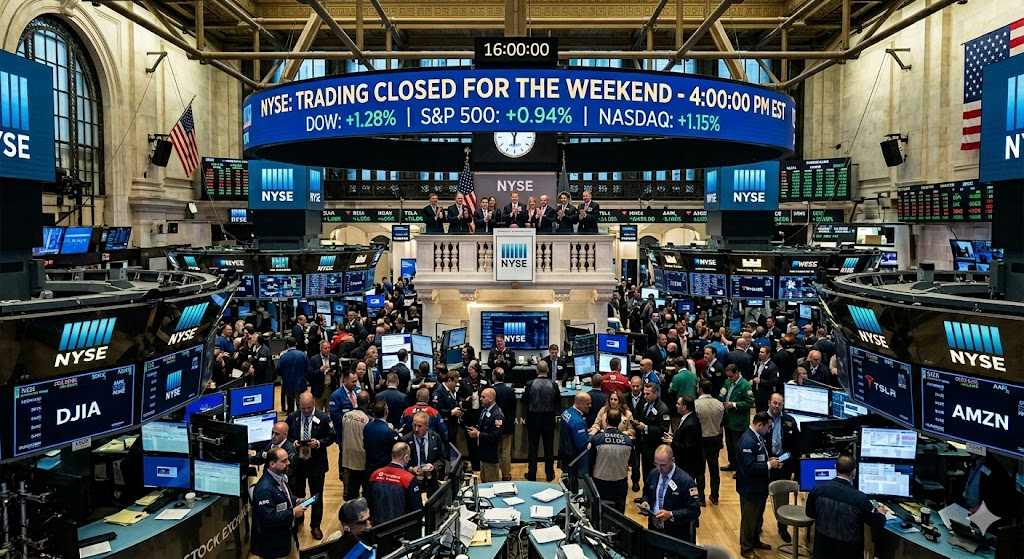
U.S. equities pushed higher Friday following a stronger-than-expected April jobs report, with the S&P 500 advancing 0.84% to close at 7,398.93 and the Nasdaq Composite surging 1.71% to 26,247.08 — both hitting new all-time intraday highs and closing at records. The Dow Jones Industrial Average was essentially flat, ticking up just 12 points to settle at 49,609.16. All three major averages posted weekly gains, with the S&P 500 and Nasdaq each logging their sixth consecutive winning week — the longest run since 2024.
"The economy is so much better than what the doom crew has been saying. There are a lot of headwinds — higher oil prices, sticky inflation — but the labor market is simply not breaking."
The headline number was April nonfarm payrolls at 115,000 — nearly double the Wall Street consensus of 60,000 — driven by large gains in healthcare and transportation and warehousing. Unemployment held at 4.3%. March and April now mark the first back-to-back months of six-figure job growth since late 2024. Average hourly earnings rose 0.2% month-over-month to $37.41, up 3.6% year-over-year: hot enough to keep the Fed on hold, but not enough to spook markets. Federal government payrolls continued their slide, shedding another 9,000 positions and now down 348,000 — or 11.5% — since October 2024.
Not everything was rosy. The University of Michigan's preliminary May consumer sentiment index dropped to a historic low of 48.2, with surging gas prices tied to the Iran conflict cited as a primary driver. Markets largely shrugged it off, choosing to lean on the labor data — but it's a number worth watching heading into next week's CPI print. The Cleveland Fed projects CPI rising to 3.6% for April and potentially 3.9% for May, largely due to energy price pass-through from the war.
The War
As of Friday's close, the United States is awaiting a formal response from Iran on a proposal to end the war, after Iranian media reported sporadic clashes between Iranian and U.S. naval forces in the Strait of Hormuz. Secretary of State Rubio said Friday the U.S. expected Iran's response "today." President Trump said he was expecting a letter from Tehran "supposedly tonight." An Iranian Foreign Ministry spokesperson called it a "grotesque absurdity" for the U.S. to seek peace while Trump threatened that if no deal is reached, Iran would face "one big glow."
The framework on the table includes a nuclear enrichment moratorium, extraction of Iran's uranium stockpile, phased sanctions relief, and a resolution to Strait of Hormuz tensions — potentially launching 30 days of final negotiations. Pakistan-hosted talks are being floated as a venue. Brent crude has stabilized around $100 per barrel after pulling back on peace deal optimism earlier in the week, but JPMorgan economists warned Thursday that the supply buffers insulating the oil market from the war are eroding and that demand destruction is coming as consumers adjust to higher energy prices.
The market is in a remarkably resilient uptrend — six straight winning weeks, new record highs, and AI-driven earnings momentum still intact. But it's threading a needle between a hot labor market, sticky inflation, and a war that hasn't ended. The Iran letter is the weekend's wild card. Don't stray too far from the news feed.