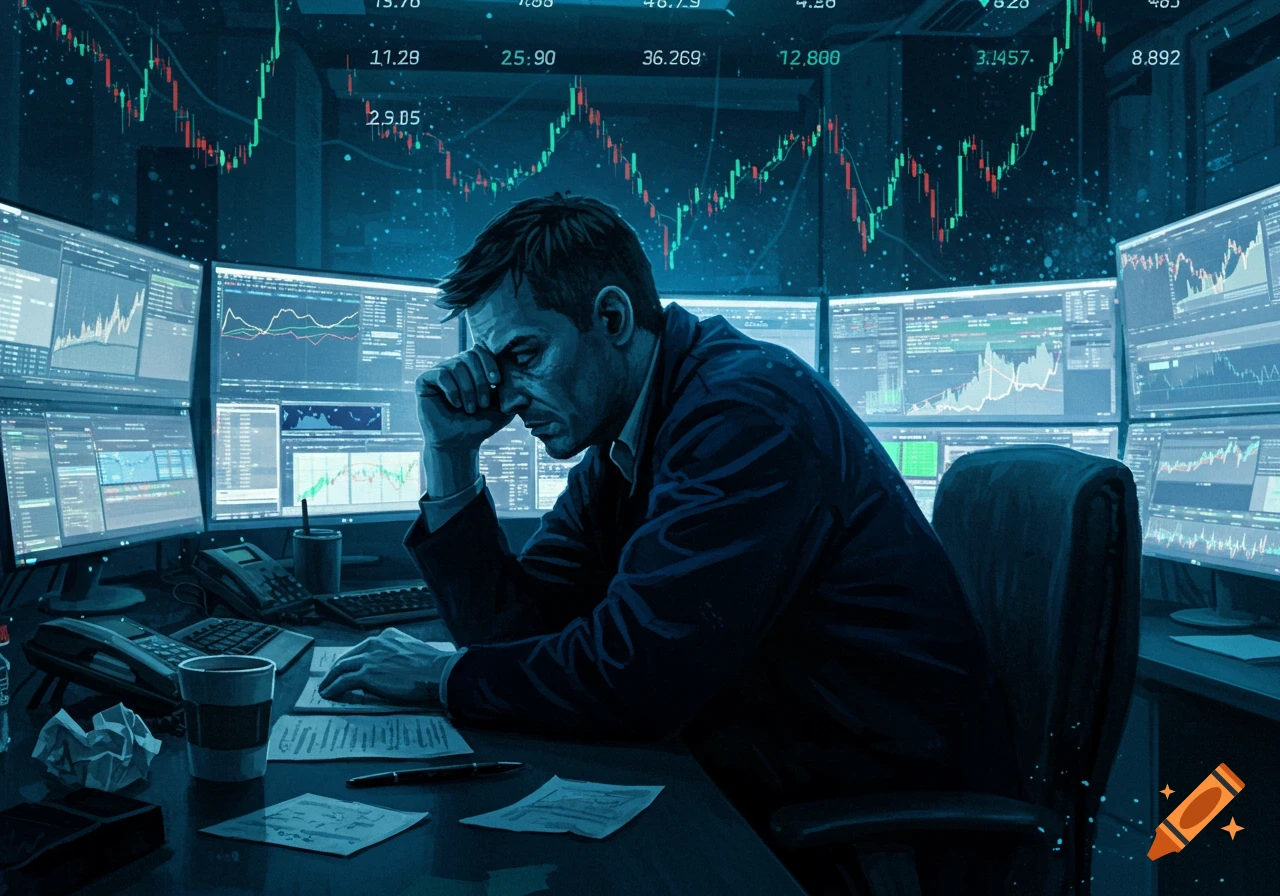
Using too many indicators. This was one of the first mistakes I made as a new trader. I thought there was some secret combination of indicators that was going to make me successful. This could not be further from the truth. It seemed the more indicators I used, the more I would become confused. Today I only use volume weighted average price (VWAP) on my charts. And if I am being honest, I could probably trade just as well without it.
Fear of missing out (FOMO.) This is one of the hardest things I had to overcome as a trader. When I first started trading, I would see price move and I would feel like I was missing out. I felt like I always had to be in a trade. When the reality is, the more selective I was with my trades, the more consistent I became.
Revenge or rage trading. Often referred to as revenge trading, I prefer to call it rage trading. This is when you take a trade, get into profit and suddenly you’re facing a loss. Now you are frantically looking to make back that loss and then some. This is when you are not following your rules. This is where funded accounts get blown – quickly.
I have had my funded account blown in the first ten minutes of trading due to rage trading. An account that I spent the past weeks building up, trading well and following my rules. All it takes is that first trade that goes against you to put a bad taste in your mouth. That bad taste turns into me reversing my position, only to see price turn around and go the way I was expecting in the first place.
Overtrading. This was a tough habit to break. I’d win my first trade and rather than pack it up for the day, I would use that win to fuel my next trade. Then the next. I would over confidently enter trades after winning the first trade. Causing me to risk more throughout the day. Many times the second trade was a loss. Now I am down from my daily high. I want to get it back. This is where I would start to over/rage trade.
Forcing trades. As retail traders, we need to remember that we are not moving the market. Your goal is to move with the market. The banks, hedge funds and other institutional traders are the ones that decide market direction. Patience pays. This is something I have on my trading desk to remind me to wait for the setup. Not entering trades based on boredom and FOMO.
Greed. Another difficult hurdle to overcome — at least it was for me. Imagine taking your first trade of the day and it being a winner. You look at the clock, and it is only 20 minutes into market open. You might start thinking to yourself that “there is plenty of time left to place more trades, make more money.” The second trade you take is a loss, and now half of your daily profit has been lost. This can set you up for a string of further losses as revenge trading could start to creep up without you even noticing it. Now you want to win back what you’ve lost. You start taking trades that don’t follow your rules. You dig yourself a hole and you’ve now lost more than you had won on your first trade.
Not having a trading plan. Walking into the market without a plan is like walking into a casino and betting on a whim. A trading plan is your rulebook — it defines your entry criteria, your exit strategy, your risk tolerance, and your daily loss limit. Without one, every decision becomes emotional. The market will always present you with what looks like an opportunity. Without a plan to filter those opportunities, you will take them all. And taking them all is a fast track to blowing your account. Your plan does not have to be complex. In fact, the simpler it is, the easier it is to follow under pressure.
Ignoring risk management. New traders tend to focus almost entirely on entries — when to buy, when to sell. But experienced traders will tell you that how much you risk on each trade matters far more than where you enter. Risking too large a percentage of your account on a single trade means that one bad day can wipe out a week of gains. A general rule many traders follow is to never risk more than one to two percent of their total account on any single trade. It sounds conservative, but consistency over time is what builds accounts — not home runs.
Not keeping a trading journal. This was a habit I wish I had adopted from day one. Keeping a journal of every trade you take — the setup, your reasoning, your emotions, the outcome — gives you data. Over time, that data tells a story. It might reveal that you trade poorly on Monday mornings, or that your best setups come in the first hour of the session, or that you consistently cut winners too early. You cannot fix what you cannot see. A journal holds up a mirror to your trading and forces an honesty that most traders would rather avoid.
Letting winners turn into losers. We have all been there. You are in a trade, it moves nicely in your favor, and rather than taking profit or moving your stop to break even, you hold on — waiting for more. Then price reverses. Now you are watching a solid winner become a small winner, then break even, then a loss. Learning to honor your original profit targets and protect your gains is a discipline that separates profitable traders from those who consistently give money back to the market.
The bottom line. Every trader on this list has made these mistakes — most of us more than once. The difference between traders who eventually succeed and those who wash out is not talent or access to better tools. It is the willingness to be honest about your weaknesses, study your patterns, and commit to continuous improvement. The market is one of the most humbling arenas you will ever step into. Respect it, follow your rules, and protect your capital above all else. The trades will always be there tomorrow.


